Belgium Grand Prix 2026: Spa Circuit Betting Strategy & Race Analysis
Your Belgium Grand Prix 2026 F1 betting guide — Spa circuit analysis, tyre strategy, market tips & race winner picks from our F1 expert.

Spa-Francorchamps has humbled more championship leaders than any other circuit on the calendar. The Belgium Grand Prix 2026 F1 betting market will be shaped by one brutal reality: this track rewards raw power and punishes defensive setups. Any constructor that arrived in Belgium running a high-downforce configuration suited to Monaco or Hungary has already made a strategic error.
The 2026 regulations — with their revised aerodynamic philosophy and the new hybrid power unit architecture — make Spa even more of a leveller than usual. The Kemmel Straight remains the longest flat-out section on the circuit, and with DRS still active across two zones, power-unit output is going to separate the field more aggressively than it did through the mid-2020s. Teams that have nailed their MGU-H deployment cycles through Eau Rouge and up to Les Combes will have a natural qualifying advantage that translates directly into race pace.
Weather is always a factor at Spa, but treat it as a variable to monitor rather than a market trigger. The smart money doesn't chase rain — it positions before conditions clarify and forces poor value from bookmakers scrambling to reprice.
Spa Circuit Characteristics That Drive the Betting Market
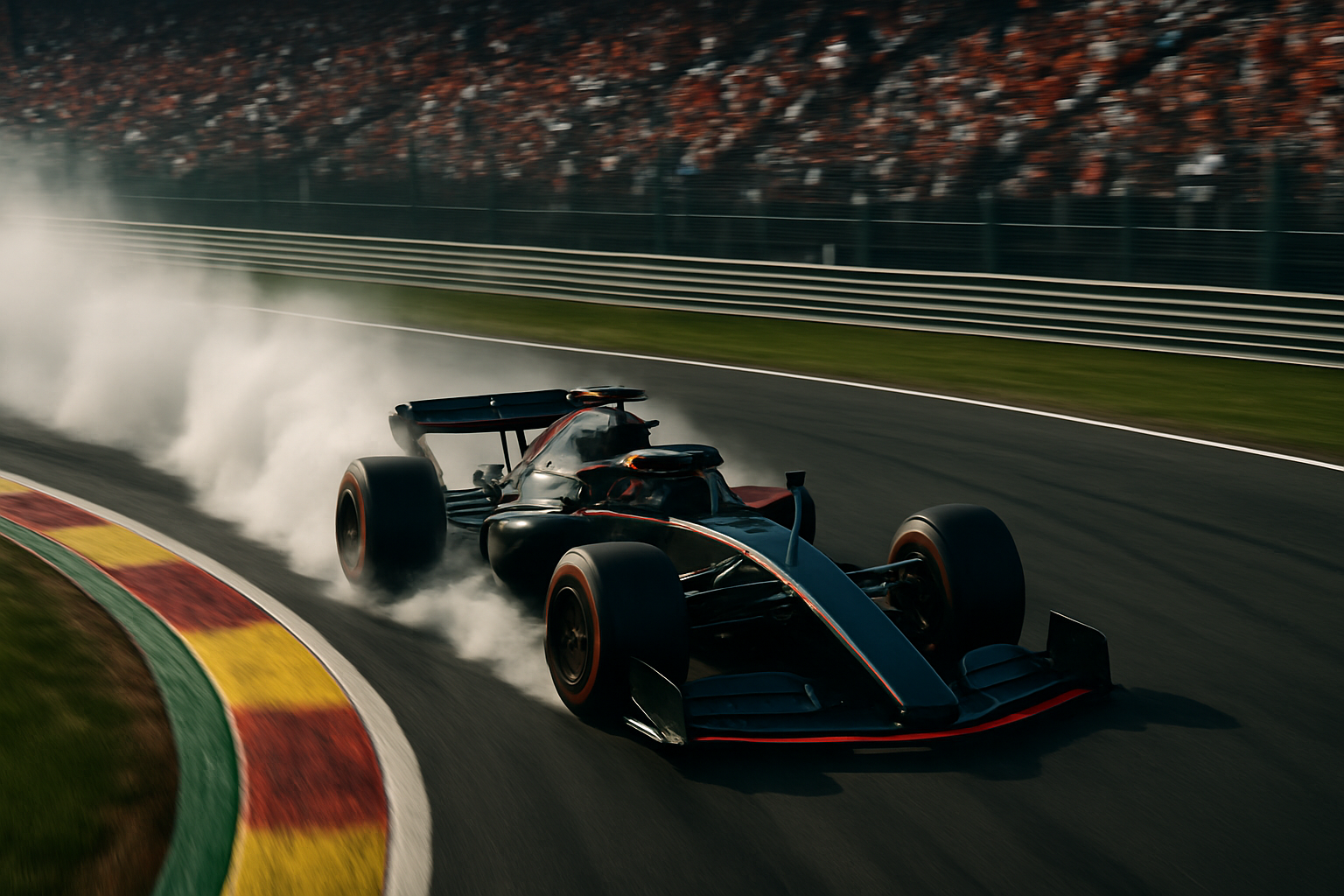
Seven kilometres of tarmac that demands everything from a car. The high-speed complex through Raidillon — regardless of what the FIA now calls the revised entry — remains one of the most loaded corners in motorsport. Downforce level is a genuine compromise here: too little and you're a passenger through the fast stuff; too much and you're giving away a second per lap down the Kemmel Straight to your rivals.
The two DRS zones — activation point after Bus Stop chicane onto the straight, and the second on the Kemmel — mean overtaking is genuinely possible, which matters enormously for betting. At circuits where passing is nearly impossible, starting position is destiny. At Spa, a driver qualifying fourth or fifth can realistically target a podium. That suppresses the starting-grid premium and makes podium finish markets more interesting than straight race-winner bets at short prices.
Tyre behaviour at Spa is deceptively complex. The long, high-load corners build heat quickly, but the sheer length of the lap — combined with some slow chicane sections — creates an uneven thermal cycle. Pirelli's C2 and C3 compounds typically appear here, and the C2 tends to reward drivers who manage entry temperatures rather than braking aggressively to rotate the car. Historically, teams running a two-stop strategy have been forced into it by graining rather than degradation — worth keeping in mind when evaluating strategy-based prop bets.
Belgium Grand Prix 2026 F1 Betting — Markets Worth Your Attention
Race winner pre-qualifying is genuinely not the play here. Wait. Spa qualifying is chaotic — a damp Sector 1 at the wrong moment eliminates a favourite; a perfectly timed flying lap vaults a midfield car into the top three. Let qualifying settle the grid before committing to race-winner money.
The market that consistently offers value at Spa is head-to-head driver matchups within the same constructor. Spa exposes setup philosophy at team level, but it also exposes individual driver confidence at Raidillon. A team-mate who qualified within two tenths in Hungary can be a full half-second adrift in Belgium simply through circuit-specific car feel. That discrepancy is often underpriced by bookmakers who lean too heavily on championship standings.
Fastest lap is another angle worth building into your strategy. With two DRS zones and a power-unit-friendly layout, fastest lap attempts on fresh softs in the final five laps are highly executable. Teams positioned fifth to eighth — outside the podium hunt but not defending — frequently take the punt. The odds on fastest lap for a second-tier frontrunner are rarely efficient, and Spa's lap structure makes the attempt genuinely viable. Check out the best F1 betting sites for fastest lap markets that offer each-way-style structures.
Constructor points finishes deserve attention too. Spa's overtaking opportunities mean a car that qualifies eighth can reasonably finish fifth. For constructors fighting in the midfield — where a three or four-point swing per race changes championship position — the double points finish market at 2/1 or better can represent genuine expected value.
The Contrarian Case: Don't Overweight Power Unit Advantage
Everyone tells you Spa is a power circuit. They're right — but only up to a point. The sector through Pouhon and the Arena complex rewards mechanical grip and aero balance as much as outright horsepower. A constructor with a slight deficit on the power unit but exceptional low-speed traction has regularly punched above expectation through the final sector.
The broader point: betting markets at Spa over-index on straight-line speed data from qualifying. If a driver has maximised engine modes in a single flying lap, their race pace — particularly through the high-load medium-speed sections — may not reflect that same gap. A 0.4-second qualifying deficit doesn't always mean a 0.4-second race pace deficit at Spa. The market frequently fails to adjust for this, which creates opportunity in the race winner at longer odds or top-four finish markets for technically strong but less powerful packages.
Qualifying Strategy and Its Betting Implications
At Spa, Q3 is won and lost on a knife-edge. The circuit's length — and the corresponding long out-lap — means tyre temperature management into a single flying lap is critical. Teams that have practised their out-lap discipline across Friday long-run simulations will be better positioned. Watch Free Practice 2 data carefully; the race simulation pace, not the time attack, tells you more about Sunday.
If weather interrupts Q2 or Q3, the entire grid order becomes unpredictable. In those scenarios, the smart move is to back multiple drivers in head-to-head markets at short prices rather than chasing distorted race-winner odds that bookmakers have already moved aggressively. For the full picture on how to navigate a disrupted qualifying weekend, the F1 2026 season hub has session-by-session breakdowns.
Practical Betting Framework for Race Day
Structure your Spa betting in three phases. Pre-qualifying: identify your head-to-head driver picks based on circuit history and setup tendencies, and lock those in — these markets move less on qualifying results. Post-qualifying: assess whether the grid order matches the underlying pace. If a driver has overperformed in qualifying — suspiciously clean lap in compromised conditions — their race odds may be artificially suppressed. That's a sell, not a buy.
Race morning: fastest lap and podium markets. By this point you have tyre allocation data, long-run pace from Friday, and the grid. Spa's race is rarely dull — safety car probability is higher than the calendar average given the circuit's history — so build that into any live betting plan. A safety car in the first fifteen laps reshuffles strategies and creates undercut opportunities that can fundamentally alter who finishes on the podium.
Spa rewards patience and specificity. The bettors who arrive with a single race-winner pick and no framework get burned when the weather turns or a power-unit failure reshapes the front of the grid. Know your markets, know the circuit, and wait for the moment when the odds haven't caught up with what the data is telling you.
Follow the 2026 Formula 1 season
Race calendars, qualifying results, championship standings and F1 betting tips — all in one place.
View Formula 1 HubRelated Articles
This article is for informational purposes only and does not constitute financial or betting advice. Always gamble responsibly. 18+ only. BeGambleAware.org