Netherlands Grand Prix 2026: Zandvoort Circuit Guide & Betting Strategy
Your full guide to Netherlands Grand Prix 2026 betting — circuit breakdown, tyre strategy, market value, and the best bets at Zandvoort.

Netherlands Grand Prix 2026 betting starts and ends with one word: Zandvoort. This is not Monaco, where the circuit neuters the cars. It is not Monza, where slipstream chaos makes the race a lottery. Zandvoort is a driver's circuit — narrow, relentless, and allergic to overtaking — which means qualifying position is worth more here than almost anywhere else on the calendar.
The Dutch Grand Prix has become one of the most technically fascinating weekends of the F1 season. Banked corners, a single DRS zone, and an abrasive surface that punishes anyone who misreads tyre degradation. Get your pre-race analysis wrong here and you will hand the bookmakers your money before a single formation lap is driven.
With the 2026 regulations now bedded in — the new power unit formula, revised aerodynamic rules, and the shift to active aero — Zandvoort throws up fresh questions about which cars and drivers will genuinely thrive. Pole position here has historically translated to victory at a rate that should make you very careful about backing winners from outside the top three on the grid.
Zandvoort Circuit Characteristics: What the Track Demands
The Circuit Zandvoort is 4.259 kilometres of high-speed commitment. There are no meaningful straights by modern F1 standards — the longest is barely 600 metres — and the single DRS detection point feeding into Turn 1 limits overtaking opportunities severely. Races are frequently won in the pit lane, not on track.
The banked Hugenhöltz corner and the final banked hairpin — Arie Luyendijk — allow drivers to carry extraordinary speed without overloading the front tyres, but the medium-speed technical sections in between are where rear tyre wear becomes the defining variable. A car that eats its rear rubber in sector two will be exposed regardless of straight-line pace.
With 2026's revised aerodynamic regulations placing greater emphasis on ground effect efficiency at medium-speed corners, constructors who have nailed their floor geometry stand to benefit disproportionately here. A car that generates downforce mechanically rather than through drag-heavy wings will carry more speed through Zandvoort's constant-radius bends without cooking the rears.
Wind direction matters enormously at this coastal circuit. A headwind on the main straight trivialises overtaking even further. Always check Saturday's weather forecast before committing to any market.
Netherlands Grand Prix 2026 Betting: Where the Market Value Actually Lives
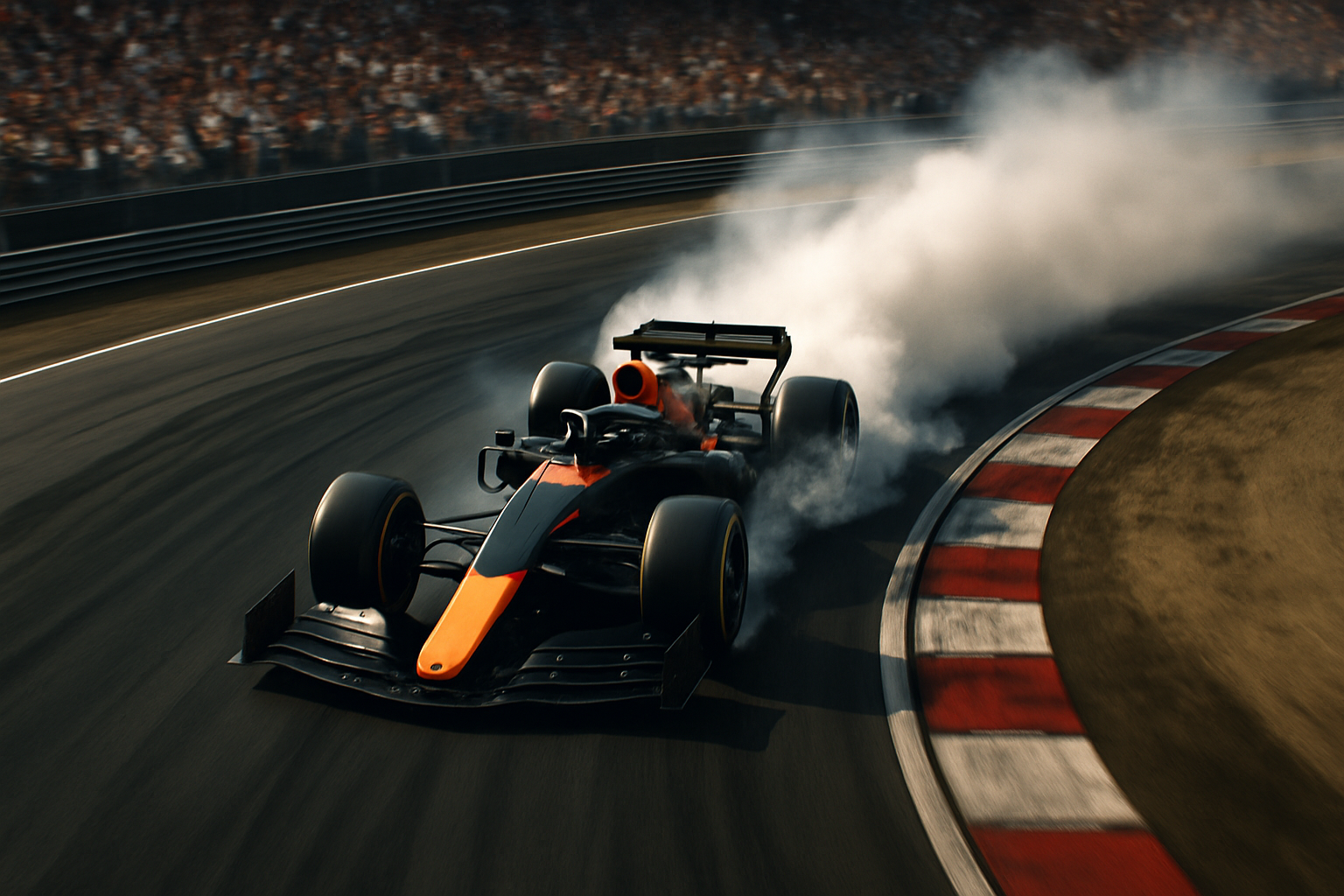
Betting on the race winner market pre-qualifying at Zandvoort is, bluntly, a poor use of money. The pole-to-win conversion rate at this circuit is among the highest in F1. Wait for qualifying to settle before touching the race winner.
The markets where genuine value exists are podium finish, fastest lap, and head-to-head driver matchups. Zandvoort's narrow confines mean a driver starting fifth or sixth who qualifies cleanly can still reach the podium through tyre strategy and safety car timing — but the race winner market will already have priced that in before Sunday morning.
Fastest lap is worth targeting specifically here. The 2026 regulations have widened the performance gap between constructors in qualifying trim versus race trim. A team that sacrifices qualifying pace for race balance — and there are usually one or two each season — will send their driver out on fresh softs in the final ten laps, and Zandvoort's short lap time means a fresh-tyre attack is highly effective. Identify that team before the race and the fastest lap market offers real value at the right price. Check the best F1 betting sites for fastest lap markets, as coverage varies significantly between bookmakers.
Constructor points markets deserve serious attention at Zandvoort. The circuit's limited overtaking means that when two team-mates qualify closely, both tend to finish closely. A constructor priced generously to outscore a rival is frequently a better bet than any individual driver market.
Tyre Strategy: The Race Within the Race
Pirelli typically brings the C2, C3, and C4 compounds to Zandvoort — a middle-of-the-road selection that sounds straightforward but creates strategic chaos in practice. The C4 soft qualifies brilliantly but degrades sharply on this abrasive surface under race conditions. The C3 medium is the workhorse compound, and races are generally won on a one-stop medium-medium or soft-medium-medium strategy.
The undercut window here is tighter than most circuits because the lap time delta of a new set of mediums versus worn mediums drops off quickly — Zandvoort's lap is simply too short to build the gap required for a comfortable undercut. Teams know this. Expect safety car-driven strategy swings to be decisive, particularly if there is a VSC period in the first quarter of the race before anyone has pitted.
A two-stop soft-medium-medium strategy is the contrarian call that can win this race — and bookmakers rarely price it into their strategic outcome markets. If a driver qualifies in the top four on softs and the race breaks free from clean air early, an aggressive two-stop covering strategy can deliver a result that looks baffling on the timing screens but makes perfect sense on the tyre data.
Driver and Constructor Angles to Watch
Zandvoort rewards drivers who are technically precise rather than bravado merchants. High-commitment, smooth steering inputs preserve rear tyre life through the banked sections. A driver who bullies their rear axle through high-speed corners — fast on a single lap, devastating on tyres over distance — will struggle here relative to their season average.
The crowd factor is real. The circuit is effectively a home race for Dutch fans, and the atmosphere is extraordinary, but it has no bearing on lap times. Do not let the orange grandstands influence your betting reasoning.
In terms of constructors, the 2026 regulations have rewarded teams with strong correlation between their simulation tools and real-world performance. A team that has shown strong race pace in low-downforce conditions — particularly at circuits with high mechanical grip demands — is worth monitoring heading into Zandvoort. Follow our F1 2026 season hub for updated constructor form ahead of race week.
Safety Car Probability and Market Timing
Zandvoort has a moderate-to-high safety car probability. The narrow circuit leaves almost no run-off in certain sectors, and contact between drivers attempting the limited overtaking opportunities often results in debris. Historically, the Dutch Grand Prix has seen at least one safety car or VSC intervention in the majority of its recent runnings.
This makes the safety car market a genuine consideration, and it also means live betting on the race winner immediately after a safety car deployment can offer value — prices shift fast and bookmakers occasionally lag behind the strategic picture. Know the live market before race day, not during it.
The practical takeaway is this: build your Zandvoort betting strategy around qualifying results, tyre strategy reads, and targeted markets — fastest lap, podium finishes, head-to-heads — rather than outright race winner pre-qualifying. The circuit's structure makes pole extraordinarily valuable, which means the pre-race winner price for the front-row sitter is almost always compressed beyond value. The money is made in the margins here, just like the racing itself.
Follow the 2026 Formula 1 season
Race calendars, qualifying results, championship standings and F1 betting tips — all in one place.
View Formula 1 HubRelated Articles
This article is for informational purposes only and does not constitute financial or betting advice. Always gamble responsibly. 18+ only. BeGambleAware.org